

How to Compare Chevrolet SUVs and Trucks: 2025–2026 Model Breakdown
Shopping for a new ride can feel a bit much at first, especially with so many choices online, and Chevrolet’s lineup doesn’t make it simpler. You’ve got roomy options like the Tahoe and Suburban, great for families that need plenty of seats and space for gear. Then there are the tougher choices: Silverado 1500, 2500 HD, and the midsize Colorado, each made for different kinds of work, from towing on weekends to heavy hauling at the jobsite. When comfort meets strength, it helps to look at what sets each model apart.
This guide looks at Chevrolet SUVs and trucks from 2025 to 2026, comparing performance, size, tech, and price so you can find the Chevy that matches your needs and budget.
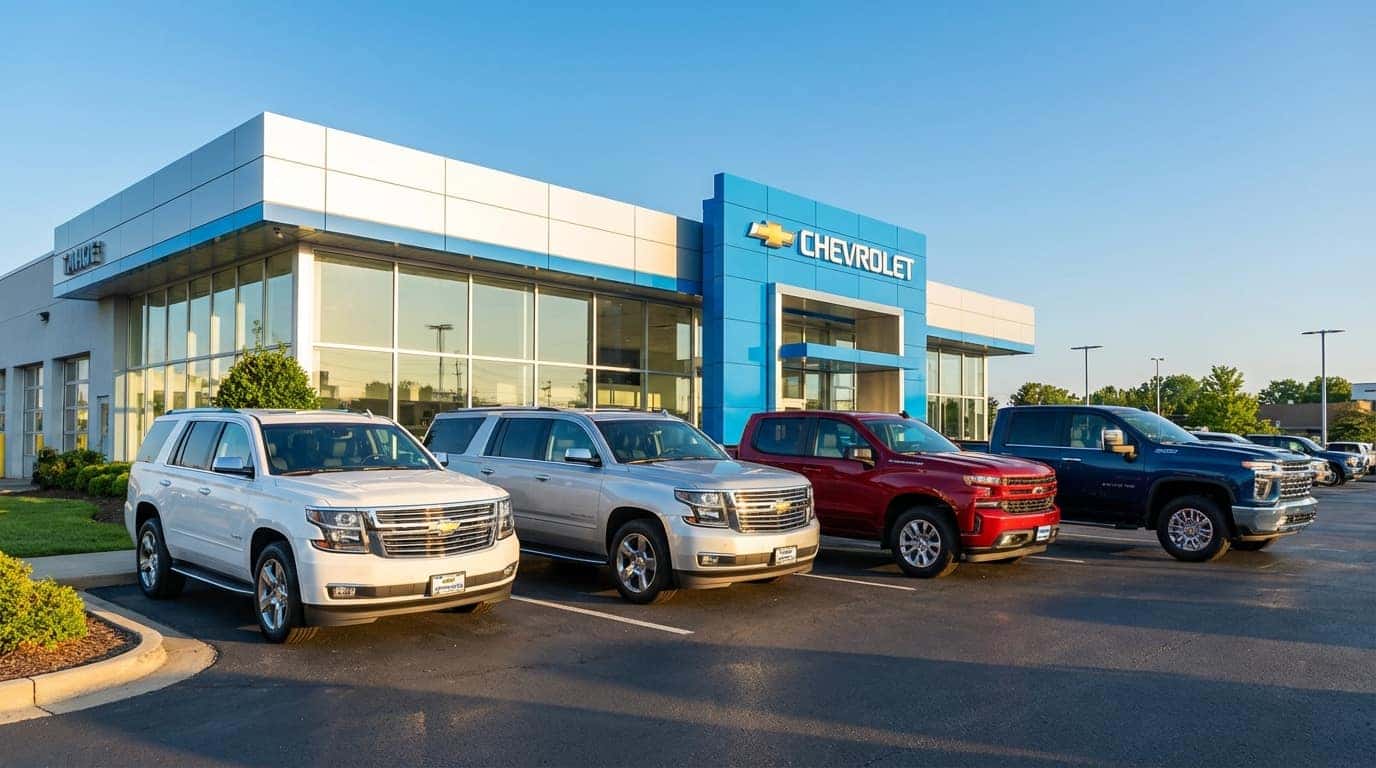
Understanding Chevrolet’s SUV Lineup (2025-2026)
Chevrolet’s SUV group seems designed for nearly every kind of driver. In the 2025 and 2026 lineup, you’ll find compact models like the Trax and Trailblazer, midsize choices such as the Blazer and Traverse, and full-size favorites, the Tahoe and Suburban. Each one mixes strength, comfort, and plenty of room to stretch out, which often matters more than people realize once they spend time behind the wheel.
Compact SUVs fit city life or quick getaways. They slide easily into tight parking spots and use less fuel than larger models. Move up to the Blazer or Traverse and you’ll get more cabin space and towing ability, great for families or anyone hauling equipment. Then there’s the Tahoe and Suburban: confident, tough, and made for big adventures. They combine everyday practicality with a refined touch, a balance that often shows Chevy’s design style.
| Model | Seating Capacity | Towing Capacity | Cargo Space |
|---|---|---|---|
| Trax (2025) | 5 | 1,263 lbs | 54 cu ft |
| Blazer (2025) | 5 | 4,500 lbs | 64 cu ft |
| Traverse (2026) | 8 | 5,000 lbs | 98 cu ft |
| Tahoe (2026) | 8 | 8,400 lbs | 122 cu ft |
| Suburban (2026) | 8 | 8,300 lbs | 144 cu ft |
On long trips, the Suburban’s huge cargo area and cushioned seats make cross-state drives comfortable and easy. The Tahoe offers similar power but feels simpler to park and handle. If you look closer, you’ll see Chevy’s care for details, quiet interiors, solid materials, and surprising touches that feel upscale. Even the basic trims seem well thought out. The 2025 Blazer and Traverse bring improved suspensions for smoother rides and more precise steering, giving each SUV its own character.
💡
Explore Your Perfect SUV Fit
Comparing Chevy Tahoe vs Suburban: Key Differences
Chevy’s Tahoe and Suburban share much of the same design, but they feel quite different once you get behind the wheel. The Suburban is about 15 inches longer, giving passengers more room in the third row and a big cargo area behind it, perfect for packing sports gear, camping items, or enough luggage for a long trip. The Tahoe sacrifices that extra space for easier handling, gliding through city traffic with a lighter touch and usually getting better gas mileage. Parking is simpler too, which helps if you deal with tight spaces every day.
Drivers who often fill every seat or carry bulky cargo tend to pick the Suburban. Those who prefer less size and want smoother maneuvering often find the Tahoe easier to live with. The choice really depends on how you use your SUV from one day to the next.
Both models offer a 5.3L V8, a 6.2L V8, or a 3.0L Duramax turbo-diesel engine. The diesel is great for long highway drives and towing heavy items like boats, quiet, strong, and steady mile after mile.
Inside, each comes with Chevrolet’s latest infotainment system featuring Google built-in and wireless Apple CarPlay. High-end trims, High Country, Premier, and RST, add air suspension, better sound insulation, and soft leather touches. The Tahoe’s interior feels sporty and modern, while the Suburban’s roomy cabin suits families who like to spread out and travel together.
Chevrolet Truck Buying Guide: 2025-2026
Chevrolet trucks have earned their name for being tough and reliable, qualities that matter most when work runs late or weekends turn adventurous. They’re built to handle steady jobs and spur-of-the-moment trips, proving that strength can still look good. The lineup covers plenty: the midsize Colorado, the full-size Silverado 1500, and the heavy-duty Silverado 2500 HD and 3500 HD.
Each truck fits a different lifestyle. The Colorado suits lighter work or quick getaways when the weather calls for a drive. The Silverado 1500 mixes comfort with muscle, it can tow with ease yet park neatly downtown. The HD models are made for those who move heavy loads often, like construction materials or farm gear. That kind of power shows what real strength feels like.
| Truck Model | Max Towing | Horsepower | Payload |
|---|---|---|---|
| Colorado (2025) | 7,700 lbs | 310 hp | 1,680 lbs |
| Silverado 1500 (2025) | 13,300 lbs | 420 hp | 2,260 lbs |
| Silverado 2500 HD (2026) | 22,500 lbs | 470 hp | 3,900 lbs |
The Silverado 2500 HD draws attention for its towing skill, while the Silverado 1500 appeals to drivers who want smooth power. Its trailering tech, multi-angle cameras, in-trailer checks, and smart sensors, helps make reversing or monitoring cargo easier. The 2025 Colorado’s off-road trims, especially the ZR2 Bison, attract adventure fans with tall suspension, sturdy shocks, and gear for rough ground.
💡
Match Power to Your Needs
Technology and Safety Across the Lineup
Chevrolet keeps pushing ahead with useful tech and safety improvements across its trucks and SUVs. By 2026, every model will include driver‑assist tools like Forward Collision Alert, Lane Keep Assist, Automatic Emergency Braking, and Rear Cross Traffic Alert. These features help turn stressful commutes, whether in traffic or on long drives, into something smoother and easier to handle.
The optional packages make the biggest difference. They bring adaptive cruise control, HD surround vision, and trailer safety extras with towing cameras that clearly show what’s behind you. Silverado models even have trailering apps that guide hitching and hauling, perfect for moving boats or work gear. It’s technology meant for everyday use.
Inside, big touchscreens, wireless charging pads, and flexible digital dashboards keep trip info and navigation easy to manage. Over‑the‑air updates quietly refresh safety and entertainment systems, and the smartphone app tracks fuel, tire pressure, or starts the engine remotely, great for cold mornings or quick departures.
How to Decide Between an SUV and a Truck
Choosing between an SUV and a truck really depends on how you live and what you expect from your vehicle. Maybe mornings mean school drop-offs and packed lunches, or weekends involve lumber runs and outdoor work.
SUVs usually stand out when comfort and passenger space matter most, they move easily through traffic and handle errands without fuss. Trucks, meanwhile, tend to win when towing big loads or tackling rough ground are part of your routine. Your lifestyle often matters more than the design itself.
Here’s an easy way to picture it:
| Use Case | Best Fit | Recommended Model |
|---|---|---|
| Family trips & daily driving | SUV | Traverse or Tahoe |
| Weekend adventures & light hauling | Truck | Colorado |
| Heavy-duty work & towing | Truck | Silverado 2500 HD |
| Maximum space & comfort | SUV | Suburban |
The table helps you compare quickly. Think about what’s most useful, cargo space, power, smooth driving, or fuel economy, and let that guide your decision. City drivers often like the Trax or Colorado for easy parking, while rural owners prefer the Silverado HD for tough hauling. Chevrolet keeps the choice simple and strong.
Future Trends: Chevrolet Innovation for 2026 and Beyond
Chevrolet is pushing forward with electric power and smart design updates, hoping to change how drivers see performance and efficiency. Electric versions of well-known models, like the Silverado EV and Blazer EV, are already getting attention, and that excitement is expected to keep growing through 2026 as these vehicles become easier to buy and even more refined. Big changes are coming, though they feel steady and natural rather than sudden.
Take the Silverado EV, it’s expected to go well past 400 miles on one charge while still hauling big loads just like a gas truck. That mix of muscle and eco-conscious design shows where Chevy is heading. SUVs are next, with hybrid and electric options joining the lineup to fit the brand’s goal of cleaner driving. Engineers are testing lighter materials and sleek shapes, bringing useful upgrades like two-way charging, smarter route planning, and backup power systems that can keep homes running when outages hit.
The Bottom Line: Choosing Your Ideal Chevrolet
When you look at Chevrolet SUVs and trucks from 2025 to 2026, it’s clear the lineup fits many types of drivers. Families often choose the Tahoe or Suburban for their roomy interiors and smooth rides, while the Silverado series offers the power and towing strength that works well for people who spend weekends moving gear or exploring outdoors.
A helpful way to start is by thinking about your usual routine. Once you know if your days are mostly commuting, hauling stuff, or heading out on trips, picking the right Chevy becomes much simpler. The latest models mix useful tech, driver-assist features, safety tools, and steady performance that hold up well for everyday use.
Want to see which one feels right? Visit https://www.blossomchevrolet.com/new-vehicles. Sitting in the driver’s seat and checking the details often brings that “this is the one” moment.
After a little time behind the wheel, the decision feels natural. Whether it’s a roomy Suburban, flexible Tahoe, or strong Silverado, each offers dependability and modern design that show why Chevrolet keeps earning loyal fans.
0 comment(s) so far on How to Compare Chevrolet SUVs and Trucks: 2025–2026 Model Breakdown